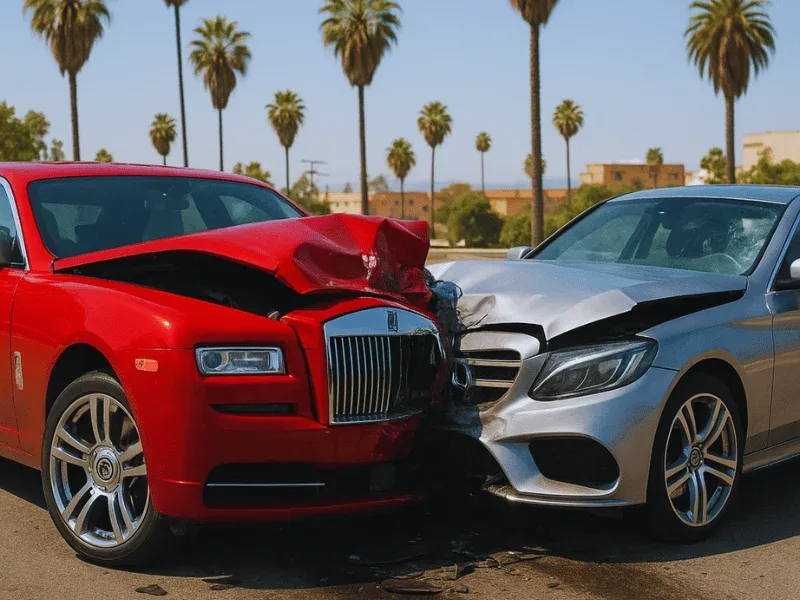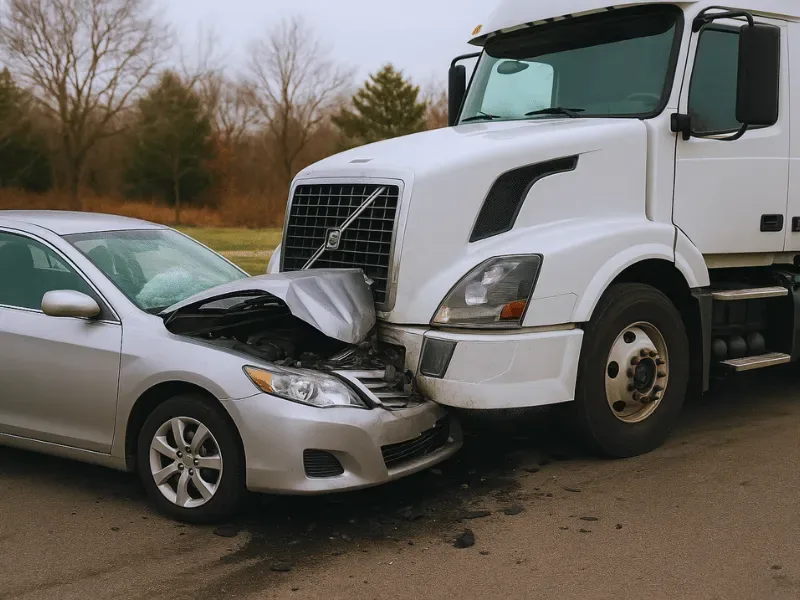
In a rideshare crash, whose insurance pays depends on what the driver's app was doing at the moment of impact. Williams & Gasparian Law represents passengers, other drivers, pedestrians, and cyclists hurt in crashes involving Uber or Lyft vehicles across Los Angeles County as well as the rest of California.
We also represent rideshare drivers who were hit by someone else. The app data is the key evidence in these cases, and the company holds it, so we request it early.
Who We Represent and How These Crashes Happen
The crash itself usually looks like any other: a distracted driver, a bad turn, a rear-end collision. The difference is who was in the car and what the app showed.
- Passengers. You were in the back seat when the driver, or someone else, caused a crash. Passengers are almost never at fault.
- Other drivers. A rideshare driver hit your car while looking at the app, stopping suddenly for a pickup, or pulling away from a curb.
- Pedestrians and cyclists. Struck by a rideshare vehicle at a crosswalk, in a bike lane, or in a curbside pickup zone.
- Rideshare drivers. Hit by another motorist while you were logged in. Which coverage applies depends on whether you had a ride assigned.
- App distraction. Drivers accept rides, follow directions, and message passengers on a phone mounted in the cab.
- Fatigue. Long shifts, sometimes across more than one app.
What You May Be Able to Recover
California law lets an injured person claim two kinds of losses.
Economic losses
- Medical bills so far, and the cost of treatment you will need later
- Wages you lost while you could not work
- Reduced ability to earn if the injury is lasting
- Repair or replacement of your vehicle or bicycle
- Other expenses the crash caused
Non-economic losses
- Physical pain
- Emotional distress
- Loss of the activities you used to enjoy
- Scarring or disfigurement
The amount of insurance available in a rideshare case can be far higher than in a typical car crash, which makes it worth getting the app status right. We do not quote case values on this site.
How Rideshare Insurance Works in California
- App off
- The driver is a private motorist. Only the driver's personal auto policy applies.
- App on, waiting for a request
- While the driver is logged into the app, waiting for a ride request, the driver or the rideshare company must provide liability coverage of at least $50,000 per person, $100,000 per accident, and $30,000 for property damage, plus at least $200,000 in excess coverage.
- Ride accepted through drop-off
- From the moment the driver accepts a ride until the passenger gets out, $1,000,000 in liability coverage applies. While a passenger is in the car, the rideshare company must also carry uninsured and underinsured motorist coverage of $60,000 per person, with $300,000 per accident.
- Drivers are contractors
- Under Proposition 22, which the California Supreme Court upheld in 2024, Uber and Lyft drivers are generally treated as independent contractors. That usually prevents holding the companies responsible for a driver's carelessness the way an employer would be, though a company can still be responsible for its own conduct. The insurance the companies are required to carry is usually the main source of recovery.
- Deadline to file
- Two years from the crash for an injury claim. The app data, however, should be requested within days.
- Shared fault
- California follows pure comparative negligence. A passenger is rarely assigned any fault. Other drivers, pedestrians, and cyclists may be, which reduces but does not eliminate the recovery.
What Happens After You Call
Five stages, from the first phone call to the day the case closes.
A free consultation
You tell us what happened. We tell you whether you have a case and what we would do first. No charge, no obligation to hire us.
Investigation
We gather the police or incident report, photos, witness statements, medical records, and video. When a case calls for it we bring in accident reconstructionists or treating physicians.
Dealing with the insurance companies
Once you hire us, insurers deal with us instead of you. We handle the calls, the letters, and the requests for recorded statements. You focus on treatment.
Negotiation or a lawsuit
When your treatment has gone far enough to know what your losses are, we send a demand. If the insurer will not pay a fair amount, we file a lawsuit and prepare the case as if it will be tried.
Resolution
Most cases settle. Some go to trial. Either way, we explain every offer to you in plain terms, and the decision to accept or reject it is yours.
Questions People Ask Us
If your driver caused the crash, the rideshare company's $1,000,000 policy is the primary source. If another driver caused it, that driver's insurer is first. Behind it is the rideshare company's uninsured and underinsured motorist coverage, which since 2026 is limited to $60,000 per person, plus possibly the uninsured motorist coverage on your own auto policy. We identify every policy that applies.
The lower tier of rideshare coverage applies, along with whatever the driver's personal policy allows. Many personal policies exclude rideshare driving, which is why the company's coverage matters. The app log establishes which period the driver was in.
Usually the practical route is a claim against the insurance the company is required to carry, rather than a lawsuit against the company itself, because drivers are classified as contractors. There are exceptions, such as negligent screening of a driver. We evaluate both.
It depends on the app status at the time. With a passenger in the car or a ride accepted, the company's uninsured motorist coverage may apply. Waiting for a request, coverage is thinner. Your own policy may also respond. Bring us the trip history.
Screenshots of the ride details, the receipt, the driver's name with photo, the time stamps, and any messages in the app. Photos of the vehicles and the scene. The names of other passengers or witnesses.
We work on a contingency fee. You pay no fee up front, and our fee is a percentage of what we recover for you. If we recover nothing, you owe no attorney fee. You owe nothing for case costs either.
Talk to a Rideshare Accident Lawyer in Glendale
If you were hurt in a crash involving an Uber or Lyft anywhere in California, call us or send the form. We will review what happened at no charge.