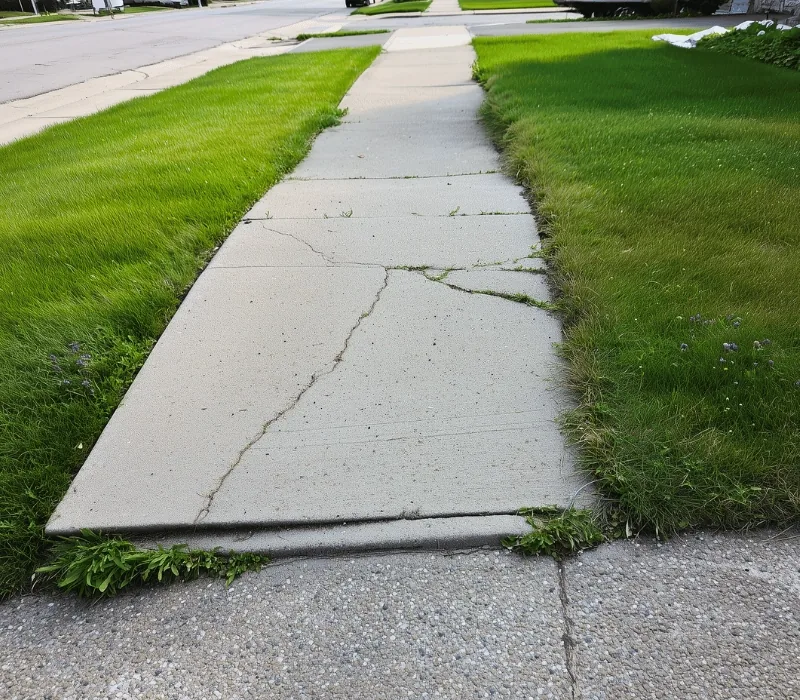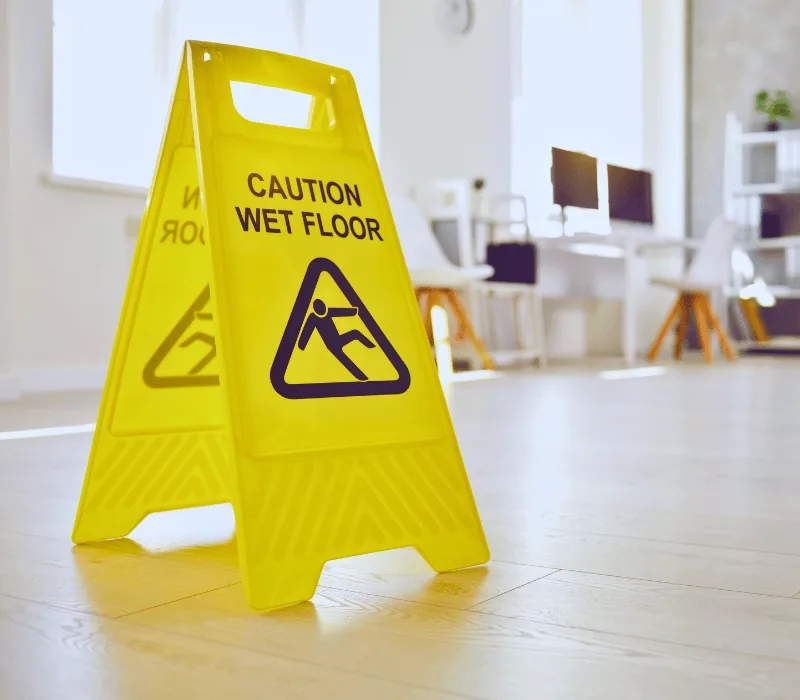
Stores, restaurants, apartment buildings, and public places in California must keep their floors reasonably safe. Williams & Gasparian Law represents people who fell because a property owner did not.
These cases are won or lost on evidence that vanishes quickly: the spill that gets mopped, the video that gets recorded over, the incident report that never gets written. Call early so we can send a preservation demand and gather what exists.
Common Slip and Fall Hazards
The question in each case is why the surface was slick and how long it had been that way.
- Spills and mopped floors. With no warning sign, or a sign placed where no one could see it.
- Leaks. From coolers, roofs, restroom fixtures, or ice machines.
- Grease. In restaurant kitchens, on loading docks, and on parking surfaces near dumpsters.
- Wet entrances. Polished tile at a doorway during rain, with no mat.
- Loose mats and rugs. Curled edges or mats that slide on smooth floors.
- Pool decks and locker rooms. Surfaces that were never given a slip-resistant finish.
- Produce and packaging. Grapes, leaves, or plastic on a grocery store floor.
What You May Be Able to Recover
California law lets an injured person claim two kinds of losses.
Economic losses
- Emergency care, imaging, surgery, and follow-up treatment
- Physical therapy and future care
- Wages you lost while you could not work
- Reduced ability to earn if the injury is lasting
- Help at home during recovery
Non-economic losses
- Physical pain
- Emotional distress
- Loss of the activities you used to enjoy
- Permanent limitation or disability
Falls are especially serious for older adults, where a hip fracture can change the course of a life. We document the full effect of the injury before we value the claim. We do not quote case values on this site.
California Rules That Affect Slip and Fall Cases
- What you have to prove
- That a dangerous condition existed, that the owner or occupier knew about it or should have discovered it, that they failed to fix it or warn about it, and that it caused your injury.
- Notice and inspections
- A business that does not inspect its floors on a reasonable schedule can be held to have known about a hazard it should have found. Inspection logs, or the lack of them, are central evidence.
- Who is responsible
- The property owner, the business that operates there, a management company, or a cleaning contractor. The lease may divide responsibility among them, but you can bring a claim against any party whose negligence contributed.
- Public property
- A fall on city, county, or state property requires a written government claim within six months, and the standard for a dangerous condition of public property is set by Government Code section 835.
- Deadline to file
- Two years from the fall to file a lawsuit against a private owner. Six months for a government claim.
- Shared fault
- California follows pure comparative negligence. The owner will argue you should have seen the hazard. Your recovery is reduced by any share of fault assigned to you, not eliminated.
- Incident reports and statements
- You should report the fall to the business before you leave if you can. You are not required to give a recorded statement to their insurer, and we recommend that you do not.
What Happens After You Call
Five stages, from the first phone call to the day the case closes.
A free consultation
You tell us what happened. We tell you whether you have a case and what we would do first. No charge, no obligation to hire us.
Investigation
We gather the police or incident report, photos, witness statements, medical records, and video. When a case calls for it we bring in accident reconstructionists or treating physicians.
Dealing with the insurance companies
Once you hire us, insurers deal with us instead of you. We handle the calls, the letters, and the requests for recorded statements. You focus on treatment.
Negotiation or a lawsuit
When your treatment has gone far enough to know what your losses are, we send a demand. If the insurer will not pay a fair amount, we file a lawsuit and prepare the case as if it will be tried.
Resolution
Most cases settle. Some go to trial. Either way, we explain every offer to you in plain terms, and the decision to accept or reject it is yours.
Questions People Ask Us
Get medical care, even if you think you can walk it off. Report the fall to the manager and ask for a written incident report. Photograph the hazard, your shoes, and the surrounding area, including any signs or the lack of them. Get the names of witnesses. Keep the shoes you were wearing.
That is a comparative fault argument, and it is the most common one. Whether the hazard was visible, how long it had been there, and whether the store inspected the area all matter. Even if a share of fault is assigned to you, the claim continues at a reduced amount.
Possibly. A sign has to be placed where a person approaching the hazard would actually see it, and it does not excuse leaving a hazard in place indefinitely. The location of the sign and the timing matter.
Homeowners insurance usually covers a guest's injury, and the claim is against the policy rather than against your friend personally. The same rules about notice and dangerous conditions apply.
Two years for a claim against a private owner. Six months for a government claim. Store video is usually kept for days or weeks, so the practical deadline for evidence is much shorter.
We work on a contingency fee. You pay no fee up front, and our fee is a percentage of what we recover for you. If we recover nothing, you owe no attorney fee. You owe nothing for case costs either.
Talk to a Slip and Fall Lawyer in Glendale
If you fell on an unsafe surface anywhere in California, call us or send the form. We will review what happened at no charge.